
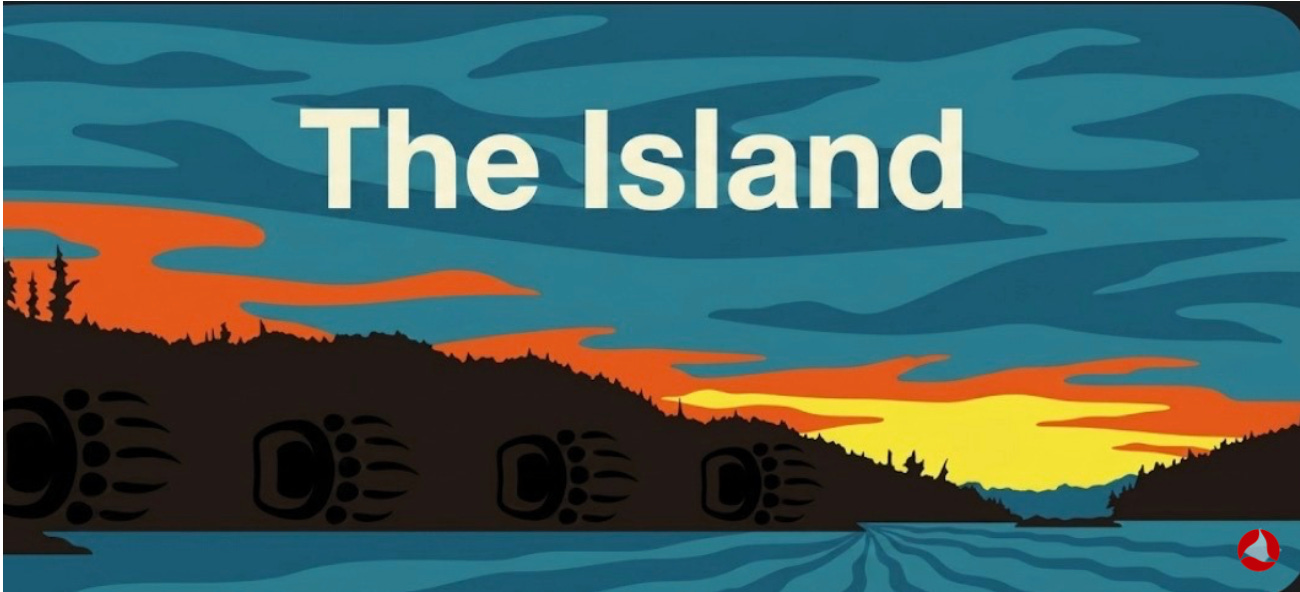
The Island

In the winter of 1987, Charlie George stood in a courtroom in Prince Rupert facing a judge who had run out of patience.
He was fifteen.
Back in Niskana Cove he had already built a reputation — fights, break-ins, stolen cars, a pack of older boys who followed him because it was easier than not following him. Juvenile detention twice. Nothing stuck. Then came Prince Rupert. A pizza deliveryman outside a convenience store, forty dollars, a baseball bat. The man survived. He would not see or hear quite right again.
The judge had seen Charlie before.
“Five and a half years,” he said. “Maybe more.”
In the back of the courtroom, Charlie’s grandfather rose. He was old — older than anyone Charlie knew — and he had not spoken in public in twelve years. Not since his son’s funeral.
He did not ask permission.
The judge looked up.
“My grandson has done wrong,” the old man said. “But your jail won’t fix him. It never has.” He paused. “Give him to me. Eight months. The old way.”
The judge leaned back. “Didn’t work last time.”
“Because I waited too long.” The grandfather’s voice did not rise. “I buried my son. I will not bury this boy. Not in a cell. Not in the ground.”
The courtroom was quiet.
“One chance,” the judge said finally. “If he fails, the sentence stands. Longer. Harsher.”
The grandfather sat down. He did not look at Charlie.
Two days later they loaded onto a punt — Charlie, his grandfather, his uncle — and headed into the grey water of Grenville Channel. Nobody said much. The engine throbbed. The sea moved against the hull in its indifferent way.
The island was small, forested, uninhabited.
His grandfather handed him a pack. Bow, arrows, knife, tarp, matches, two weeks of food.
“Eight months,” the old man said.
Charlie looked at the treeline, then at the punt, then at his grandfather.
“You made us ashamed,” the old man said. That was all.
Then they left.
Charlie watched until the sound of the engine was gone. Then a while longer.
He told himself they’d be back in the morning.
The first weeks were manageable. He had food. He built a shelter, fished, set snares, dug clams when the tide pulled back. He’d been doing this since he was old enough to hold a rod. Survival wasn’t the problem.
The problem was that there was nothing to run toward.
He chopped wood when he didn’t need to. Rebuilt the shelter for no reason. Fished in the rain. At night the ocean moved against the rocks with a patience that felt almost pointed, and the thoughts came anyway.
The fourth month, he was cleaning a fish.
The deliveryman had been wearing a hat. Blue, mesh-backed, the kind old men wear. When the bat connected it had flown off and landed in a puddle near the curb. Charlie remembered watching it float there — the way it sat in the brown water, brim up, like something waiting to be collected.
He had stepped over it to get to the wallet.
He set the fish down on the rock. His hands were cold.
He thought about the hat sitting in the puddle after they were gone. Whether anyone had picked it up, or whether it had just logged with water and sunk. He thought about the man going home that night without it, if he had gone home. About someone at a hospital being told.
He thought about a woman’s wedding ring, still warm. About a kid who had wet himself while Charlie laughed. About his grandfather driving six hours to juvenile detention with smoked salmon, sitting across a table, asking nothing.
The fish lay forgotten. The cold came up through the rock.
He did not build the fire up that night. He let it burn low and then out, and in the dark with the rain starting he pressed his forehead to the ground and stayed there a long time.
His grandfather came once a month, arriving without announcement, sometimes bringing a little food. They sat by the fire. Sometimes the old man told stories — old ones, from before Charlie’s time. Sometimes he said nothing at all.
One night Charlie said: “The man’s hat was blue.”
His grandfather waited.
“I left it in the puddle.”
The old man nodded slowly. He fed a branch into the fire.
“The community paid his medical,” he said, after a while. “Covered what the courts didn’t.” He looked into the fire, not at Charlie. “Nobody voted on it. It was just what needed doing.”
He didn’t explain further. Charlie didn’t ask him to.
On the last morning, Charlie stood on the shore with his pack. The channel was flat, the light thin and early. The punt appeared out of the mist, engine low, his uncle at the wheel.
His grandfather sat in the bow.
He looked older than eight months should have made him. Or maybe Charlie was just seeing him differently. The punt came alongside the rocks and Charlie stepped in and they moved out into the channel without speaking, the island receding behind them, getting smaller.
Charlie did not watch it go.
He sat in the stern and looked at the water moving under them and thought about the hat, and about the ring, and about the fire going out in the rain.
He thought about a long time from now, and what he owed it.
This story draws on an account involving Frank Brown of Bella Bella, who, after conviction for assault and robbery, was returned to his community and placed under the guidance of tribal elders. Frank Brown went on to become chief. It is shaped by the author’s work with the Musqueam, Heiltsuk, and Lil’wat First Nations. Niskana Cove is fictitious. The weight of what happened is not.